Posted in Deconstructing Whiteness, Racism

See Right Through It

apple-clouds-faceless-5190

For example, if I asked you, a white reader, to select three adjectives that describe you, would you be likely to include to word “white”?  -Barbara J. Flagg


This post is a discussion of Barbara J. Flagg’s Transparency Phenomenon. Please read her short article On Selecting Black Women as Paradigms for Race Discrimination Analyses for a quick introduction, or her book Was Blind, But Now I See for a longer one.

The transparency phenomenon is Ms. Flagg’s description of White people’s belief that Whiteness is not a race, but racelessness. It is the default, and there for invisible. It is as simple as why when news articles write about a White man he is described as a “man”, but when they write about a Black man he is described as a “Black man.” And it is complex as how there is an assumed “racelessness” by many within and without the fiber community to the word knitter.

When White people think of knitters, they think of White women.

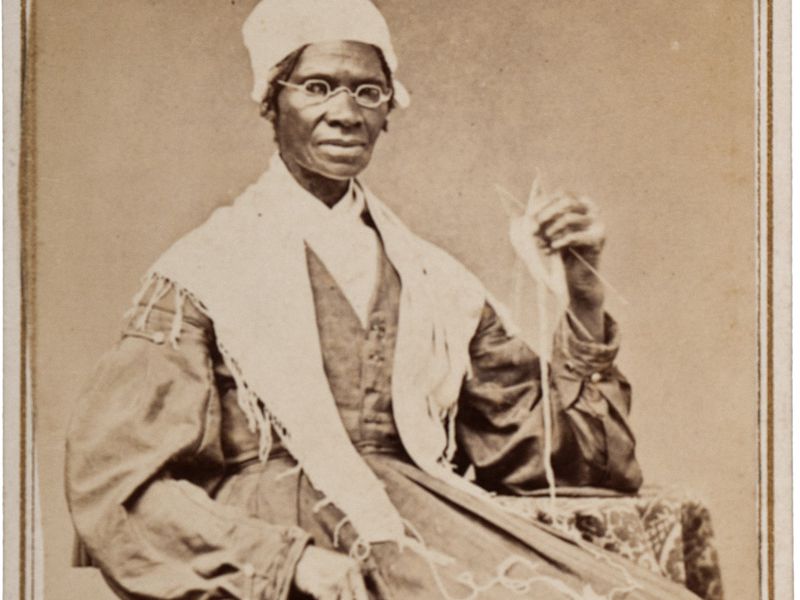
BIPOC people already know this. The #weknittoo hashtag made by Gaye Glasspie is wonderful, and 100% a response to this very thing. White people have taken this craft probably invented in Egypt and made it theirs. Not in a lovely, respectful, thank you for teaching me this way, but in grand historical theft that makes it arduous and difficult to find depictions and records of BIPOC engaged in this work. (Marina S of @heartbunknitsandmore is putting together a collection on her Insta and several others have made Pinterest boards to collect these as well.)

White women who do not want to engage in needed discussions confronting and diffusing racism in the fiber community have posted comments about how “knitting has no race,” and for them I’m sure it doesn’t. And neither do they. Because that is how they experience being White.

They’re wrong on both counts. Whiteness is as much a racial distinction as Blackness, Asianness, Nativeness, and every other category we use to harm some and coddle others in this Colonialist system we experience humanity through. And knitting is very much coded as White. These things can be changed, however, and much of the work lies at our White feet to be done.

So the next time you pick up your needles, fellow White knitters, take off your transparency-tinted glasses and remind yourself that the craft IS for everyone, but to make that true you must come to see your own race and how it has shaped your culture and your life.
Posted in Intro and FAQ

Why and Wherefore: The Journey Ahead

The above image is from Wikimedia Commons.

In the end, we will remember not the words of our enemies, but the silence of our friends. — Martin Luther King, Jr. “Letter from Birmingham Jail”


My name is Sarah. I am a White woman who has crocheted for many years and has finally gotten knitting to click in my brain. I am a fiber crafter who spends most of her Instagram time on my craft account because first I needed a break from my more political and news account and then did not want to go back. I am a social worker who spent the first four years of my career working at an adolescent residential facility seeing first hand, and sometimes participating, in the ways the US does not treat poor and/or families of color well. I am a person who saw the recent racial discussions in the fiber community and for one tiny, terrible moment was sad to find these hard subjects had followed me to this side of social media.

I am a woman whose knee-jerk response to men in communities I frequent saying they’re “tired of talking about gender” is “me too but I never get to stop.” Experiencing oppression for one part of my identity does not stop my privilege from blinding me in another. I wish it did, for all of us. The world would be kinder and easier, I think.

As I live in this universe, there is instead continued work for me to do to be a better crafter and accomplice. Here’s how I plan to do it:

  1. Twice a month learn a new knitting or crochet stitch.
  2. Twice a month learn the history and tradition of fiber work from a different culture around the world.
  3. Twice a month research and understand how a type racist action/view/expression came to be and how it is used to hurt BIPOC to this day.
  4. Write about all that here.

If you’d like to interact with me around this, feel free. I will note down all of my resources. If I have messed up or need correcting, feel free. I know this is a journey and there is no human perfection. I need to do this for myself and those I interact with in this world. Good luck on your own journeys.


I used the MLK, Jr. quote and have linked both the text of his Letter from Birmingham Jail and a recording of him reading it below because of an Instagram post that Leesa Renee Hall made on MLK Day. She is an incredible educator and she very kindly shared a prompt for free asking people to think about the differences between how MLK was viewed by his White contemporaries and how he is used by White people in power today. The 60s radical Black man is now the idealized quiet, respectful, “correct” protestor. She asked that we do this work by listening/reading Letter from Birmingham Jail and pulling two quotes that you felt highlighted that difference. I will be posting my quotes with a link to this post on my Insta as directed in the post.

My quotes are:

  • “Actually, we who engage in nonviolent direct action are not the creators of tension. We merely bring to the surface the hidden tension that is already alive. We bring it out in the open, where it can be seen and dealt with.”
  • “Frankly, I have yet to engage in a direct action campaign that was “well timed” in the view of those who have not suffered unduly from the disease of segregation.”

I picked them because they so perfectly respond to a lot of the protest tone policing being spouted by White commentators during the height of Black Lives Matter responses to American police murdering many unarmed Black men. The same things are still being said by White people who don’t want to change the status quo. If BIPOC just jump through the correct hoops White people agree to their have rights and safety! If they don’t, they can continue to sit at the back of the bus and get shot for having dark skin.


Links:

Leesa Renee Hall’s Writing Prompts

Text of Letter from Birmingham Jail by Martin Luther King, Jr.

Audio recording of Martin Luther King, Jr. reading Letter from Birmingham Jail

The History of Knitting Part 1 by Sheep and Stitch